Stablecoins and bridges: getting funds to a decentralized crypto casino safely
Money on-chain · getting in and out
Most money lost around decentralized betting is lost in transit: the wrong network, a missing gas coin, a bridge into a chain with no easy exit. Here is how to get USDC or USDT to the right chain, what to keep next to it, and the one kind of bridge to avoid.
A decentralized crypto casino can only take funds that are already on its chain, in a token it accepts. Getting them there is the part most guides skip, and it is where most avoidable losses happen. None of it is hard, but each step has one thing that has to be right.
Why stablecoins
A stablecoin keeps your balance steady in dollar terms while you play, which makes a budget mean something. If you bet in ETH or SOL, a good session can still end down because the coin fell, and the other way round. Among the live platforms:
- Overtime: USDC, WETH or OVER as collateral.
- SX Bet: USDC. Native USDC deposits are free; other tokens cost 0.33%.
- Bookmaker.xyz (Azuro): USDT is the bet token on Polygon.
- JustBet (WINR): you deposit USDC, and it is swapped into WINR, so while you play your balance is in WINR.
- Gamba: depends on which pools the site offers.
Getting stablecoins onto the right chain
Option 1: withdraw straight to the chain. If your exchange offers USDC or USDT withdrawals on Arbitrum, Base, Optimism, Polygon or Solana, pick that network and send it to your betting wallet. One step, one fee.
Option 2: bridge. If your funds are on Ethereum mainnet or another chain, use a well-known bridge to move them. Send a small test amount first, wait for it to arrive, then send the rest.
Either way, check the network twice: in the withdrawal form, and in the platform's docs. A token sent on a network the destination doesn't use may be stuck or lost.
Add gas. You will need a little of the chain's own coin to do anything: ETH on Arbitrum, Base and Optimism, POL on Polygon, SOL on Solana, SX on SX Rollup. Without it, your USDC sits in the wallet and nothing moves.
The bridge to avoid
The riskiest bridge is the one into a casino's own chain, where the only way back out depends on the project. ZKasino ran that playbook in 2024. It promoted a layer 2 for on-chain gaming and asked users to bridge ETH in. More than 10,000 users deposited about $33M worth of ether. On 22 April 2024 CoinDesk reported that the ETH had been converted into the ZKAS token and sent to Lido. On 29 May it reported a 72-hour window for users to retrieve their ether.
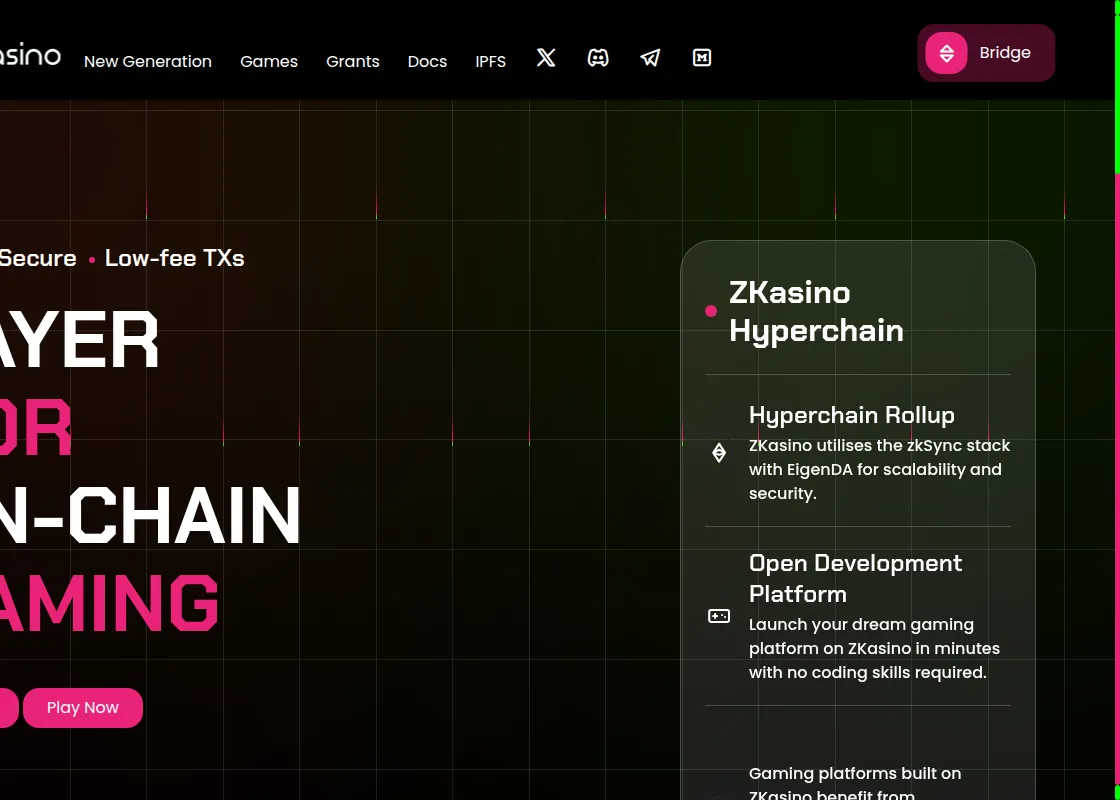
The lesson isn't “never use a new chain”. SX Bet runs on its own rollup, publishes its escrow and USDC contracts, and you can check both. The lesson is to ask one question before bridging anywhere: how do I get back out, and does that depend on anyone's decision but mine?
Getting out again
At a decentralized crypto casino there's no withdrawal request. Winnings are already in your wallet, or you claim them from the contract. On Overtime, sportsbook winnings not claimed within 90 days of a market being resolved are forfeit, so claim promptly. From there, move funds back to your main wallet or to an exchange on the same network you used to come in.
A transit checklist
- Network in the withdrawal form matches the network the platform uses.
- A small amount of the gas coin is in the betting wallet.
- New route or new bridge: a small test first.
- No bridging into a chain whose exit depends on the project.
- Keep the transaction IDs until the funds arrive.
What each chain needs is on casinos by chain. Why some platforms want you to hold their token is on casino tokens. The general habits for playing from a wallet are on safe play with a wallet.